
The Best De-Icing Aggregates for Eco-Friendly Winter Walkways
November 7, 2025
With colder months approaching, maintaining a safe walkway becomes a top priority for property owners and municipalities alike. The challenge is doing so without damaging the surrounding environment. Traditional salt-based deicers can corrode concrete, harm vegetation, and disrupt groundwater systems. Fortunately, natural aggregates offer a cleaner, more sustainable approach that provides traction and protection all season long.
Why Eco-Friendly De-Icing Matters
Conventional de-icing methods often rely on rock salt or chemical agents that melt ice through reaction rather than prevention. While effective in the short term, these substances leave behind chlorides that penetrate concrete, weakening its structure over time. Runoff can also leach into soil and waterways, harming nearby plants and aquatic life. However, eco-friendly alternatives address this concern by focusing on traction and control instead of chemical melting.
Aggregates provide a mechanical solution to a chemical problem. Rather than dissolving ice, they create a stable, slip-resistant surface that allows pedestrians to move safely. When applied appropriately, they last longer than salt, require less reapplication, and do not cause surface damage or environmental stress.
Reliability and Availability of Crushed Stone
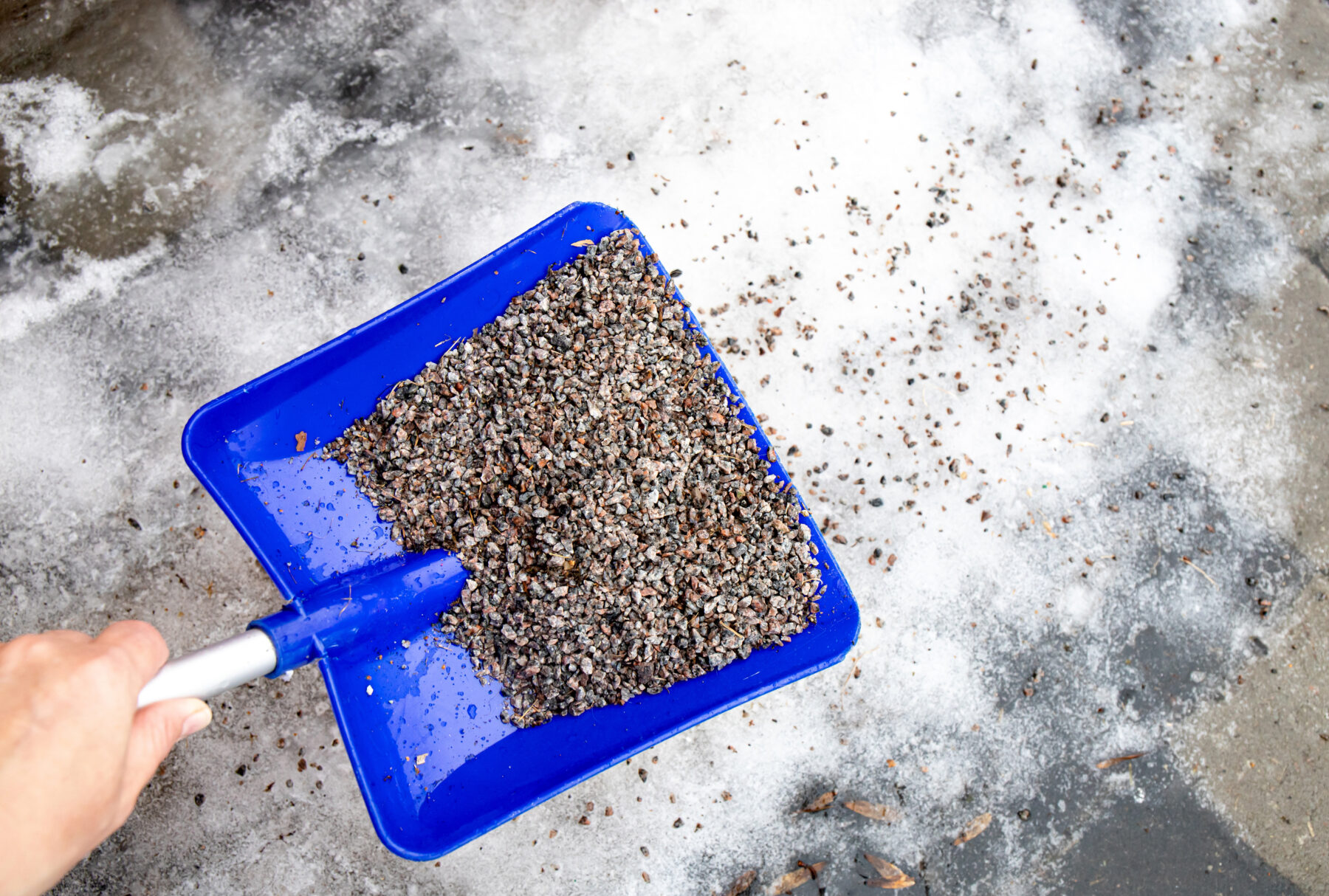
Crushed stone remains one of the most effective de-icing aggregates available. Its angular texture locks into icy surfaces, giving it superior grip compared to rounded materials. The size of the stone is important, typically between ¼ and ½ inch, for consistent coverage without being abrasive underfoot. It’s also highly durable, resisting breakdown from freeze-thaw cycles. Locally sourced crushed stone offers an added environmental advantage by minimizing transport emissions. When chosen from regional quarries, it supports sustainability goals while aligning with responsible sourcing standards.
Sand Creates Traditional Traction with a Modern Focus
Sand has long been the go-to aggregate for icy walkways, and it continues to play a vital role in eco-friendly winter maintenance. Fine-grain sand spreads evenly and fills surface voids, creating a layer that increases friction without causing harm to concrete or vegetation. When used in moderation, it’s a cost-effective solution that complements other de-icing strategies. However, not all sands perform equally. Clean, washed sand ensures better adhesion and reduces dust buildup, which can otherwise clog drainage systems. Many maintenance teams now blend sand with coarser aggregates for balanced coverage that remains effective through varying weather conditions.
Gravel Blends Form Long-Lasting Traction
Gravel-based mixes bring the benefit of longevity. A coarser blend does not wash away as easily during mild thaws or rain, making them ideal for long stretches of sidewalks and pathways. Over time, this consistency helps reduce the total amount of material needed, cutting both costs and labor.
A mix of small gravel and crushed fines offers a dual-action effect. The coarse particles provide immediate traction, while the fines settle into crevices to stabilize the surface. This combination also lowers scattering, resulting in cleaner sidewalks after plowing or shoveling.
Screening Aggregates for the Best Results
Selecting the appropriate aggregate involves elements of gradation, cleanliness, and application in addition to the material. Aggregates should be screened to ensure a uniform size and free of dust or debris that can cause uneven coverage. A consistent texture enhances safety and creates an easier post-season cleanup.
Storage also plays a key role in performance. Ensuring that aggregates remain dry during application facilitates even distribution and avoids clumping. Many operations now store materials under cover or in designated bins to maintain quality throughout the season.
Eco-friendly de-icing implies giving priority to measures that safeguard both people and the environment, not sacrificing safety. Aggregates like crushed stone, sand, and gravel blends deliver reliable traction while preserving the integrity of surrounding surfaces. With thoughtful material selection and proper application, winter maintenance can strike the right balance between performance and sustainability. As the season progresses, relying on natural aggregates is a practical way to keep walkways safe and environmentally responsible. It’s a smarter approach to winter maintenance that sets the foundation for durable, lasting pathways year after year.