
Sand, Gravel, and Drainage: Preparing for Sudden Summer Storms
June 17, 2026
Sudden summer storms along Colorado’s Front Range can drop heavy rain in a short amount of time, and properties with poor drainage often feel the impact fast. Because clay-heavy soils in the region absorb water slowly, runoff tends to move across the surface instead of soaking in. That makes the right combination of sand, gravel, road base, and erosion-control materials essential for directing water away from structures, limiting saturation, and reducing storm-related damage.
The Real Problem Starts Beneath the Surface
Surface runoff during a sudden downpour follows the path of least resistance, and on an unprepared property, that path runs straight toward structures, foundations, and landscaped areas. Clay soils compress under pressure, shedding water laterally rather than drawing it down, which means the first layer of protection against storm damage sits in the aggregate and base materials placed well in advance. The speed at which water accumulates during a fast-moving Front Range cell leaves little room for reaction, making pre-storm preparation the most consequential work a property can receive.
How Crushed Rock Changes Runoff Behavior
Crushed rock and gravel create void space that water can move through without requiring surface absorption. A drainage bed built with 3/4” or 1 1/2” Clear Creek Crushed Rock or Gray Monzonite Crushed Rock redirects water away from structures rather than letting it pool against them. The angular faces of crushed aggregate lock together under load, maintaining an open pore structure that carries water downward and laterally toward intended drainage points, even as storm volume spikes. That internal water movement keeps pressure from building against walls, pavements, or planting beds during the most intense part of a storm.
Establishing Grade with Road Base and Select Fill
Below the drainage aggregate layer, foundation grade dictates where water ultimately travels. Class 6 Road Base compacts to a firm, load-bearing surface that still moves water off-grade when sloped correctly. A consistent 1 to 2 percent pitch away from structures, established with road base, gives storm runoff a predictable exit route so volume released by a sudden weather event does not pond near foundations or infiltrate areas where it causes structural concern. Select Fill serves a similar role in larger earthmoving applications, providing the grade consistency that prevents low spots from collecting water after heavy precipitation.
Rip Rap at Transition Points
Where water exits a drainage channel or moves from a slope to flat ground, velocity becomes the controlling variable. Unprotected soil edges erode quickly when concentrated flow hits them, widening drainage paths and undermining surrounding material. Rip Rap and Granite Rip Rap absorb that energy at outfall locations and slope bases, holding channel edges intact while scattering flow across the rock face rather than cutting into soil. Placed at transition zones, these materials extend the functional integrity of any drainage system by preventing erosion from working backward into the prepared aggregate beds above.
Pea Gravel and Surface Drainage
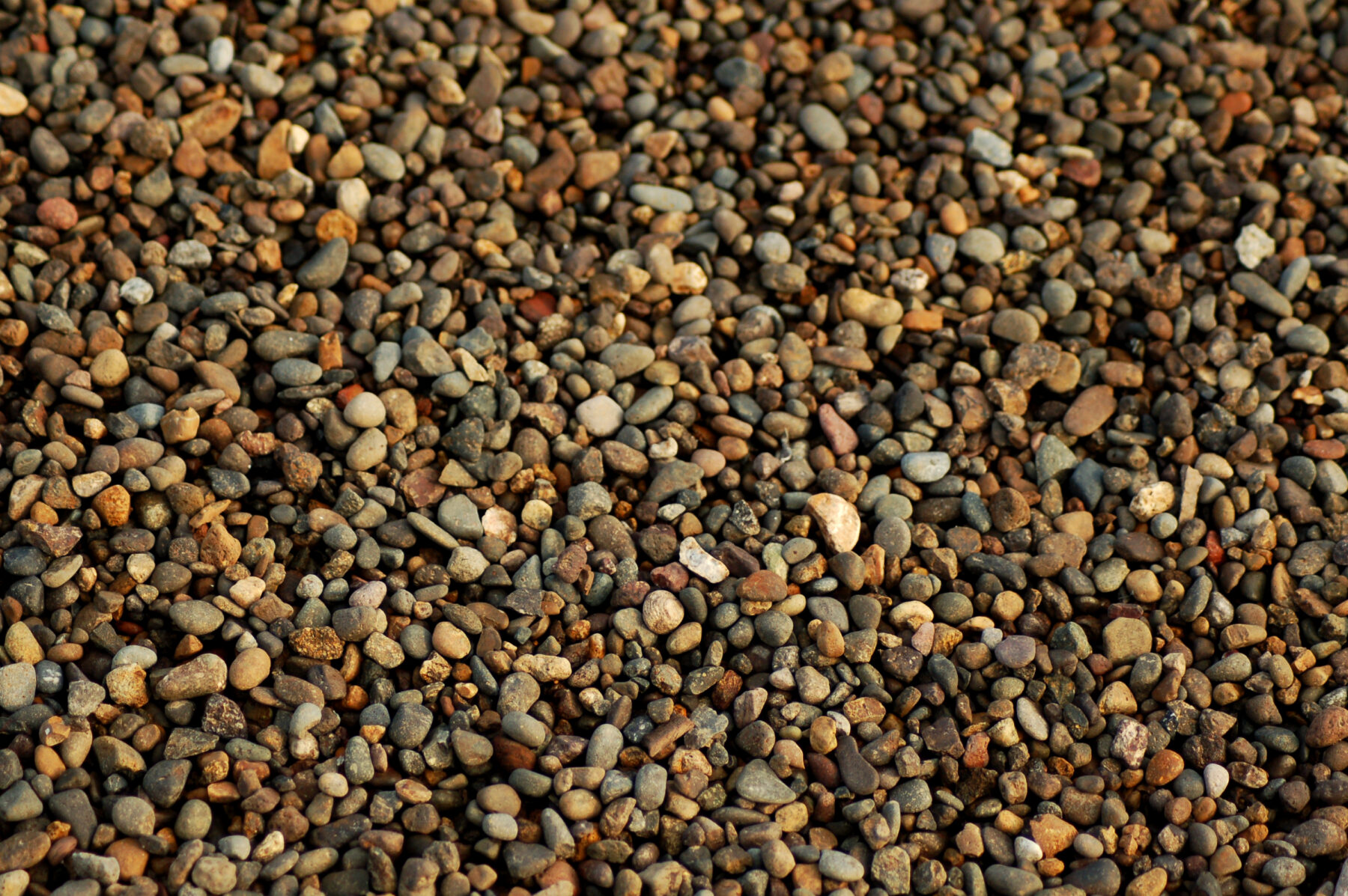
Closer to finished grade, pea gravel carries storm water across its smooth, rounded surface while creating a permeable layer that passes some volume downward into the soil profile below. Blue Mesa Pea Gravel and standard Pea Gravel work well in dry creek bed applications, channeling sheet flow from yard areas toward designed low points or outfalls and protecting adjacent planting zones from saturation. Landscape Fabric installed beneath the gravel layer prevents fine soil particles from migrating upward into the drainage profile, keeping the system open rather than gradually silting shut across repeated storm seasons.
Sand in Drainage and Bedding Applications
Concrete Sand and Mason Sand fill a specific role where uniform particle size governs water movement through a system. Concrete Sand placed beneath pavers and flagstone creates a level bedding layer that simultaneously passes water through the joint structure above, routing it down into the aggregate below rather than forcing it to sheet across the surface in uncontrolled directions. When storm volume crosses a hardscape surface, that joint drainage carries it downward through the sand bed and into the underlying aggregate layer. Mason Sand addresses similar needs in fine-grade leveling beneath structural elements where a flat bearing surface and drainage function together.
A storm-ready drainage system assigns each material to a specific phase of water movement. Road base and Select Fill establish grade and structural bearing. Crushed aggregate builds the permeable drainage bed, while Rip Rap controls velocity at transitions and outfalls. Pea gravel and sand manage surface behavior and bedding, and Landscape Fabric holds each layer in its intended position. Storm volume from even the most abrupt Front Range cell moves through a property rather than across it when these layers are in place, limiting surface saturation and protecting surrounding structures and investments. Summer storms will continue arriving without much notice, and the most effective time to act is before the season shifts. Connect with the APC Landscape team to discuss aggregate quantities, coverage estimates, and product selection for any drainage project.