
Playground Sand vs. Construction Sand: What’s the Difference and Why It Matters
May 20, 2026
Not all sand is created equal, and choosing the wrong type can lead to costly mistakes on the jobsite or in your backyard. Whether you’re building a child’s play area or laying the foundation for a patio, understanding the differences between playground sand and construction sand is essential to getting the results you need. These two materials may look similar at first glance, but their unique properties make them suited for very different applications.
What Sets Playground Sand Apart
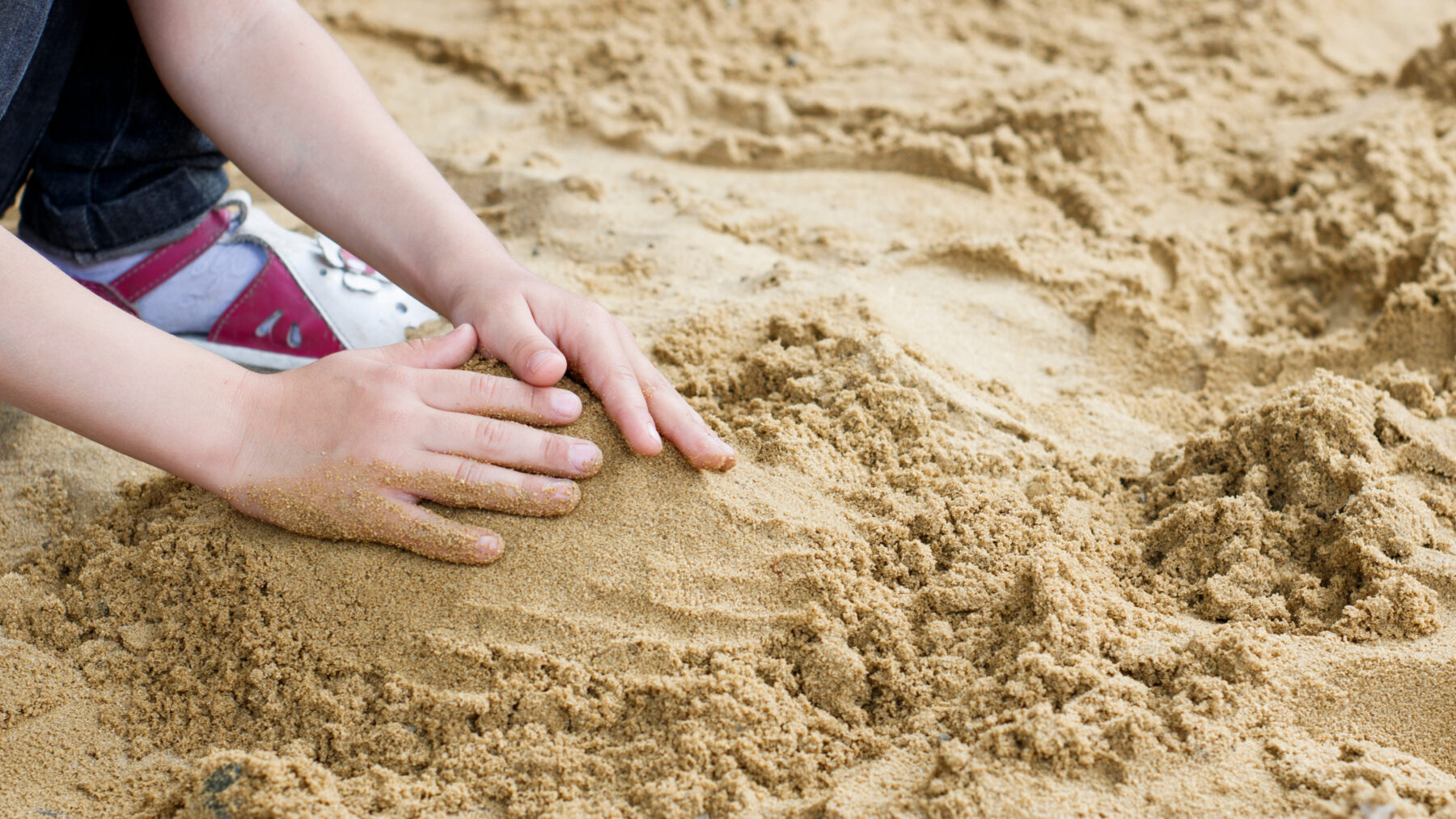
Washed, rounded, and finely screened grains are characteristic of playground sand, and each step in that processing chain answers a physical requirement tied to child play. Multiple wash cycles strip away silt, clay, and organic dust so the material stays cleaner on hands, inside shoes, and across clothing. Rounded edges reduce abrasion during falls, digging, and barefoot contact, so the surface remains gentle against skin.
Particle sizing for playground sand typically falls between 0.5mm and 1mm, a tight range that compacts just enough to hold footing without crusting over after rain. Drainage moves quickly through that narrow gradation, clearing moisture from sandbox corners after a Front Range thunderstorm instead of trapping puddles. Dust output stays low, which matters during dry, breezy Colorado afternoons when airborne fines would otherwise travel into neighboring turf, patios, and nearby indoor spaces.
The Physical Profile of Construction Sand
Construction sand carries an entirely different physical profile, shaped by its role inside concrete mixes, mortar joints, paver setting beds, and pipe bedding trenches. Angular, crushed-face grains interlock under compaction, producing shear resistance that holds lateral position when loads press down from slabs, walls, and paved surfaces. Gradation is engineered to meet precise specifications, ensuring particle sizes range from coarse to fine in controlled proportions. This allows the cement paste to fully coat each surface and fill every void within the mix.
Mineral hardness also separates construction sand from its playground counterpart. Tougher silica and quartz content resists crushing under repeated compaction passes, keeping the base intact once loaders, rollers, and delivery trucks cross the placement. Trace fines remain inside construction sand because those particles fill the smallest voids during compaction.
Where the Two Materials Separate on a Job Site
The day that placement happens there is a clear revelation of the differences between the two sands. Construction sand inside a sandbox introduces coarser contact surfaces on young skin, dust loads that travel into clothing and indoor rooms, and trace materials outside the profile typically used around toddlers and preschoolers. Playground sand placed under pavers, or inside a concrete slab, adds movement, because the rounded grains lack the angular interlock that resists settlement and displacement.
Moisture behavior also diverges once each material reaches the ground. Playground sand channels water through quickly, which suits above-ground sandboxes and kinetic play features in the Front Range climate. Construction sand traps control moisture during compaction cycles, which is exactly the condition a paver setting bed or concrete pour needs to reach full density, correct hydration, and proper bond across the placement.
Common Sand Grades Inside the Construction Family
Several named grades sit inside the construction sand category, and each one ties to a specific placement condition. Concrete Sand runs coarser and meets ASTM C33 gradation, which is why it anchors ready mix concrete, paver setting beds, and pipe bedding across Front Range construction work. Mason Sand sits finer and cleaner, matching the tighter bond lines of mortar joints, stucco scratch coats, and brick veneer.
Squeegee fills in as a crushed, angular sand running around 3/8 inch down through fines, often placed under pavers, behind retaining walls, and beneath flagstone where compactable support holds the surface in plane. Sandy Fines carry a higher ratio of very fine particles, giving them a role in pathway topping, arena footing blends, and backfill pockets where tight packing matters. Each grade behaves according to its particle shape and gradation, and substitution across grades shifts the placement result.
Sand selection driven by grain shape, wash level, and particle gradation replaces guesswork with material logic, and the result holds up whether the end use is a child’s sandbox or a poured concrete driveway. Contact APC Construction to line up the right sand for the next project on the calendar.