
4 Things to Consider When Choosing Gravel for a Commercial Property
October 1, 2026
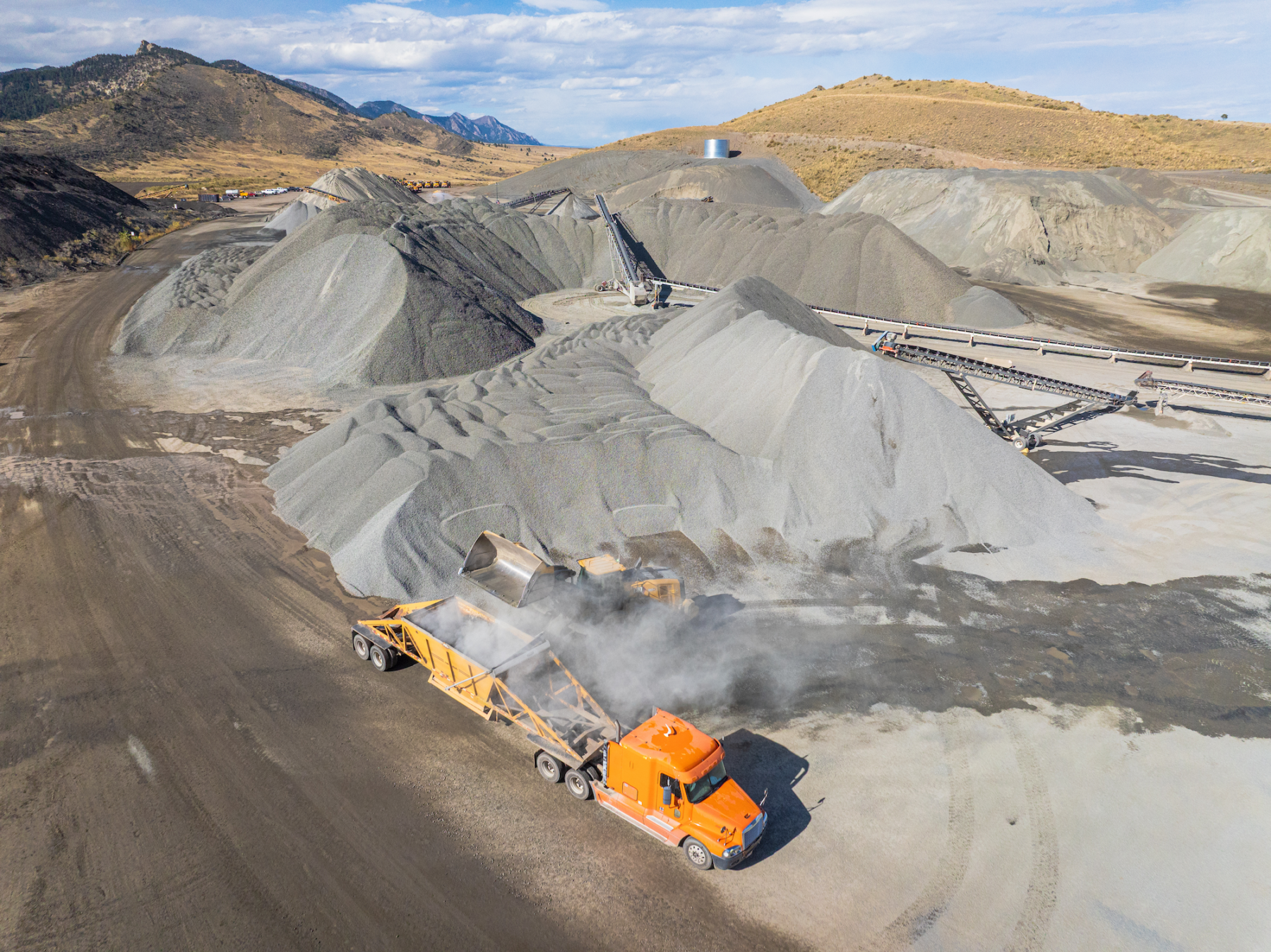
Commercial properties usually need more than one type of gravel. A parking area, loading zone, equipment yard, and access road can all put different demands on the material, even on the same site. Choosing the right gravel starts with understanding how each part of the property will actually be used.
- What Load Will the Commercial Gravel Need to Carry?
A parking area built mainly for employee cars carries a lighter, more predictable load than a yard that sees loaded box trucks, waste haulers, or forklifts every day. That difference decides how thick and how tightly compacted the base course needs to be before gravel ever gets ordered. A crushed, angular base material compacts into an interlocking layer that spreads weight across the site instead of concentrating it under a single tire path, which is what keeps ruts from forming where trucks turn or stop.
Ground conditions add another variable to that same decision. In a climate that swings between hard overnight freezes and fast afternoon thaws, the soil beneath a compacted base moves more than most property owners plan for, and a base cut thin to save on material tends to show that movement first. Sizing the base to the heaviest regular load a property actually sees, not the average one, keeps a commercial surface from needing a repair pass within its first season.
- What Gravel Size Is Best for Different Areas of a Commercial Property?
A single commercial site rarely does one thing everywhere, even once its base is sized correctly. A loading dock or equipment yard needs a coarser, more angular surface rock that locks in place under repeated axle loads and tight turns, while a perimeter drive or overflow parking area can run on a smaller, tighter gradation that costs less per ton and holds up fine under lighter traffic. Specifying the same material across the whole property usually means overpaying in the low-traffic areas while underbuilding the ones that take the most punishment.
Surface rock chosen mainly for its color or availability holds up differently than aggregate engineered for the job under that kind of repeated load. Rounded or decorative stone tends to roll and migrate toward the edges of a lot within a season, while a crushed, angular gradation sized for the job stays where it’s placed. Matching gradation to how each section of a property actually functions, rather than picking one spec for the whole site, keeps a surface from needing a full re-topping within its first few years.
- How Should a Commercial Gravel Lot Handle Drainage?
That same gravel section also has to be built around where water will go once it reaches the property. A slight crown, sloped from the center of a lot toward its edges, sheds rain and snowmelt before it can pool against the base. Flat grading looks fine on paper but leaves runoff sitting against a compacted base long enough to soften it from below, and that softening is what turns a stable lot into a rutted one.
Where a site’s natural grade can’t clear water fast enough on its own, an open-graded rock layer beneath the surface course gives that water somewhere to go instead of pooling. That layer works because its particles leave void space between them, letting water pass through rather than collect against the compacted base above it. A lot with its grading and drainage worked out before gravel goes down avoids the regrade that follows once water finds a low spot with nowhere else to go.
- How Should Future Expansion Affect Gravel Selection?
Once load, gradation, and drainage are settled, the gravel still has to work for a property that keeps changing. A yard expands, a new loading area gets added, or a lot picks up overflow parking it didn’t need the first year. When that happens, new gravel has to match the gradation already on the ground, or the seam between old and new sections telegraphs through the surface for years. Returning to a known source makes it easier to match the gradation and material characteristics already in place, especially when a property expands in phases.
Material pulled from a single, consistent source solves that problem before it starts. Stone quarried to the same spec today as it was on the original order compacts the same way, settles the same way, and blends into an existing base rather than sitting on top of it as its own layer. Planning for a property’s next phase, not just its first one, is part of choosing the right gravel from the start.
Choosing Commercial Gravel for the Entire Site
The right gravel specification becomes clearer once the property is treated as a working site rather than a single surface. Truck routes may need a deeper base and coarser crushed material, parking areas may call for a different gradation, and every section needs grading that moves water before it reaches the layers carrying the load. Building those conditions into the material plan from the beginning also makes later additions easier to tie into what is already in place.
APC Construction produces Class 6 Road Base and Gray Monzonite Crushed Rock at its Ralston Quarry for commercial applications with different traffic, base, and surface requirements. For a new commercial property, lot expansion, or resurfacing project, request a quote today to identify the gravel products that fit the site and how it will be used.