5 Ways Proper Aggregate Selection Reduces Maintenance Costs Over Time
September 2, 2026
A driveway that needs rebuilding within its first year rarely failed because of the surface. It failed because the wrong material went underneath it. Around Golden and the wider Front Range, the aggregate chosen for the base, surface, drainage and expected traffic sets how often a site needs grading, patching and resurfacing for years to come.
Freeze-thaw winters and heavy spring runoff test every surface across the region. Getting the material right from the start is what separates a surface that holds for years from one that needs constant attention.
- What Is the Best Aggregate for Load-Bearing Driveways and Parking Areas?
The base does the structural work. It carries vehicle weight and resists repeated compaction, a job decorative rock was never built to do.
Class 6 Road Base is a quarry-processed, three-quarter-inch-minus product made for that load. It holds its gradation load after load, so a compacted base stays put under truck traffic, parking loads and daily use. Loose decorative fill shifts underneath the surface course and takes the surface down with it.
A base built from engineered aggregate stays intact for years. A base built from material chosen for its color often needs a rebuild inside 12 months.
Takeaway: Match the base material to the load, not the look, to avoid the most expensive failure on the site.
- How Does Surface Rock Type Affect Driveway Washboarding?
Above the base, the surface course takes the brunt of daily tire contact. Its shape decides how fast that layer breaks down.
Gray Monzonite Crushed Rock, quarried at APC’s Ralston site in three-quarter-inch and other sizes, keeps its angular faces locked together under traffic. Rounded pea gravel rolls loose and migrates toward the edges. Angular gradation resists washboarding and ridge formation, which stretches the interval between top-ups and resurfacing.
A surface built from angular crushed rock holds its profile through a busy season. Rounded rock chosen for availability alone tends to need replacing before its next scheduled maintenance.
- How Does Drainage Rock Protect the Aggregate Base?
A base and surface built to spec still depend on where water goes. Water that collects against a compacted base instead of moving through it turns a stable surface soft once freeze-thaw cycling sets in.
Around Golden and the surrounding foothills, snowmelt and sudden summer storms both push water toward the lowest point on a site. An open-graded rock, sized to let that water pass through, carries the moisture away before it can do damage.
Clear Creek Crushed Rock, sized at one-and-a-half-inch and three-quarter-inch, creates the void space a drainage layer needs without collapsing under the load above it. A base that stays dry through the seasons compacts consistently and resists movement, which limits regrading and patching after the ground thaws each spring.
Takeaway: Drainage rock protects the investment already made in the base. Without it, freeze-thaw does the damage instead.
- Does Aggregate Grade Need to Match Traffic and Vehicle Loads?
Not every square foot of a site sees the same traffic. Specifying the same aggregate across an entire site usually means overpaying in low-traffic areas and underbuilding where wear actually concentrates.
Recycled Asphalt reinforces secondary lanes, haul roads and areas due for future repaving, freeing up budget for a heavier aggregate where trucks and daily traffic concentrate. Select Fill, a general-purpose base material, rounds out that lower-traffic tier without the cost premium a structural-grade product carries.
Grade matched to actual use aligns a maintenance budget with where wear really happens.
- Why Should Repair Material Come From the Same Quarry?
Repair material pulled from the original quarry matches the original gradation from the first load to the tenth. That match lets a patch bond into the surrounding base rather than sitting on top as a separate layer.
Consistency matters more at the repair stage than most property owners expect. Two sections built years apart from the same specification still compact and settle as one continuous layer, because the stone itself matches. A single quarry-direct supplier keeps that specification available for as long as a property needs it, so a section that needs attention later gets patched with the same material rather than the closest available substitute.
Plan Aggregate Selection for the Years Ahead
Aggregate selection is a long-term maintenance decision, not a one-time purchase. Match the base to its load, choose angular rock for the surface, build in real drainage, grade material to actual traffic and source repairs from the original quarry. Those five decisions keep a surface intact for years without repeat regrading or early resurfacing.
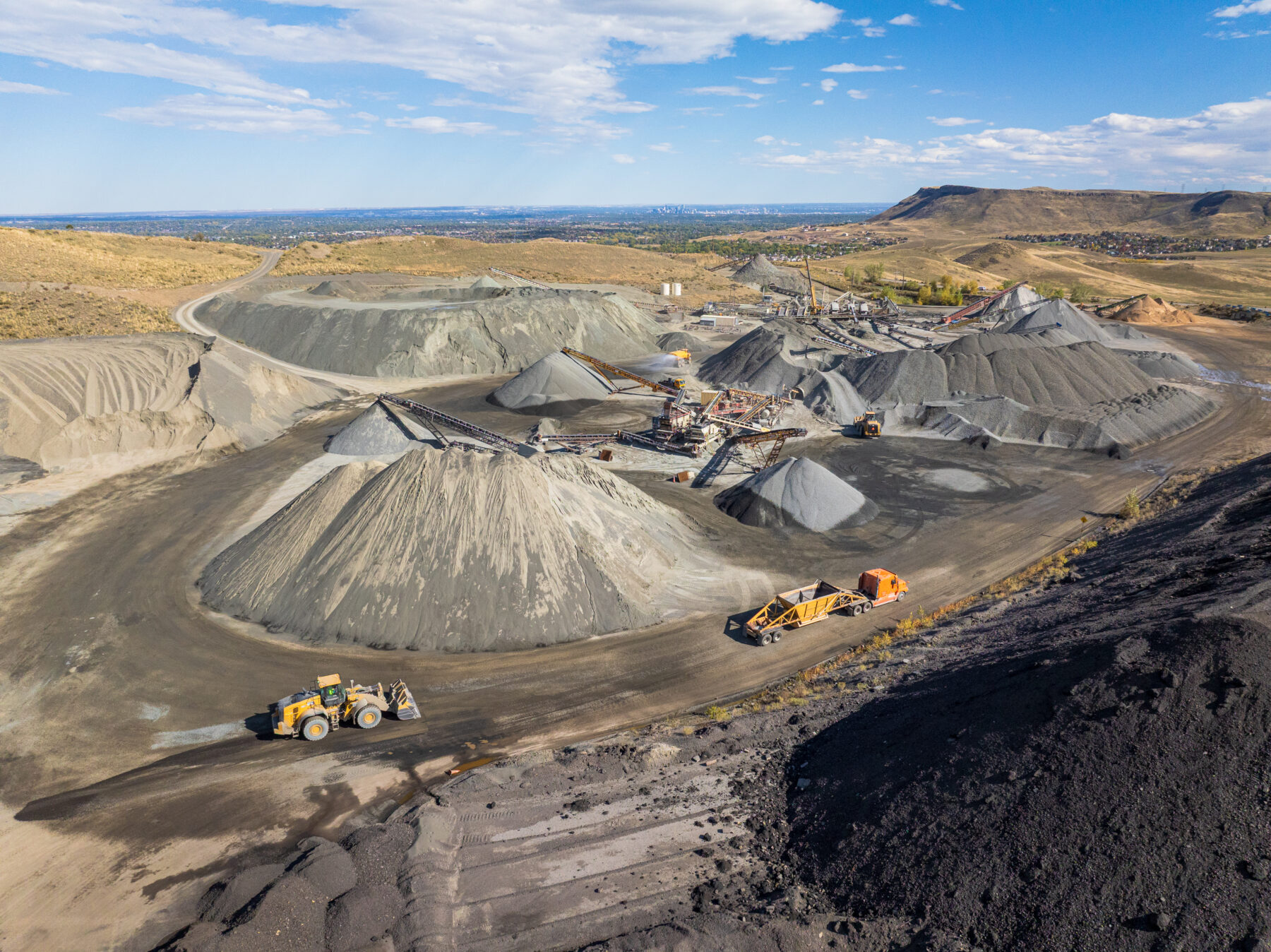
Freeze-thaw winters and heavy spring runoff test every base and surface course across Golden and the wider Front Range. Aggregate sized and sourced for that climate keeps working through both. APC Construction has quarried its own Ralston site near Golden for more than 70 years, supplying the same material to the Front Range and communities within 100 miles. Request a quote to plan the right aggregate for the next project.
Frequently Asked Questions
What aggregate is best for a gravel driveway on the Front Range?
Class 6 Road Base is the most common choice for load-bearing driveways around Golden and the wider Front Range. It compacts well, holds its gradation under vehicle traffic and resists shifting through freeze-thaw cycles.
How often does a gravel driveway need resurfacing?
A driveway built with engineered aggregate matched to its load and traffic can go several years between resurfacing. Surfaces built from decorative or mismatched rock tend to need attention much sooner, often within the first year.
Why does aggregate choice affect long-term maintenance costs?
Material that shifts, migrates or softens under load creates compounding repair cycles. Aggregate chosen for its structural role, not just its appearance or price, holds its position and reduces how often a surface needs grading, patching or replacement.
What is the best drainage rock for Colorado’s climate?
Open-graded rock sized to create void space, such as one-and-a-half-inch or three-quarter-inch crushed stone, moves water through the base layer before freeze-thaw cycling can soften it. Clear Creek Crushed Rock is commonly used in drainage applications across the Golden and Front Range area.
Does it matter where repair aggregate comes from?
Yes. Repair material sourced from the same quarry as the original installation matches the gradation and compaction profile of the existing base. That consistency allows a patch to bond as part of the surface rather than sitting as a separate layer on top of it.